
Students at the Collège André Léotard in Fréjus and at the Collège Frédéric Mistral in Nice, in the south of France, enjoyed using authentic scientific processes during triangulation workshops in early June led by INAF researcher Dario Barghini, with Chiara Lamberti.
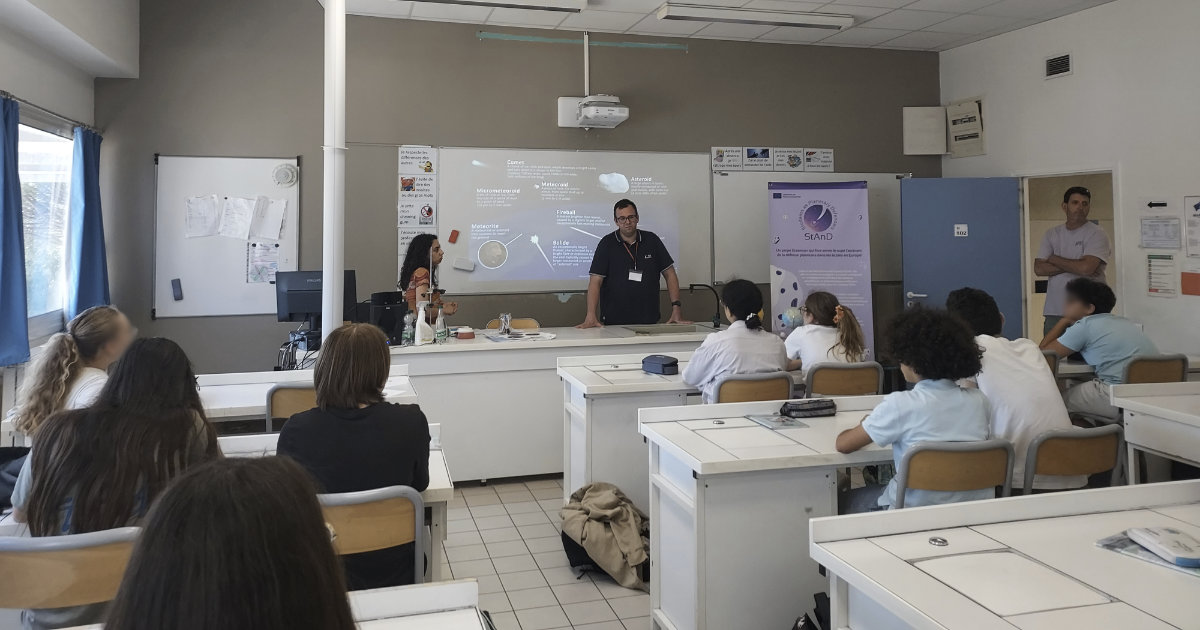
The classes were also able to practise their English through the topic of planetary defence with Dario, translated into French when necessary by Chiara. The workshop started with a theoretical introduction to asteroids, with the students watching an animation of the asteroid belt between the orbits of Mars and Jupiter, and learning the difference between asteroids, comets, meteors and meteorites–and fireballs.
Then they took part in a practical activity to find the area where a fireball could have fallen. Using images from the three StAnD cameras in France that captured a fireball they plotted the angle of its track on a map with goniometers or protractors. After comparing their results and discussing why there were variations, the last part of the workshop was to identify a real meteorite from among a selection of terrestrial rocks.
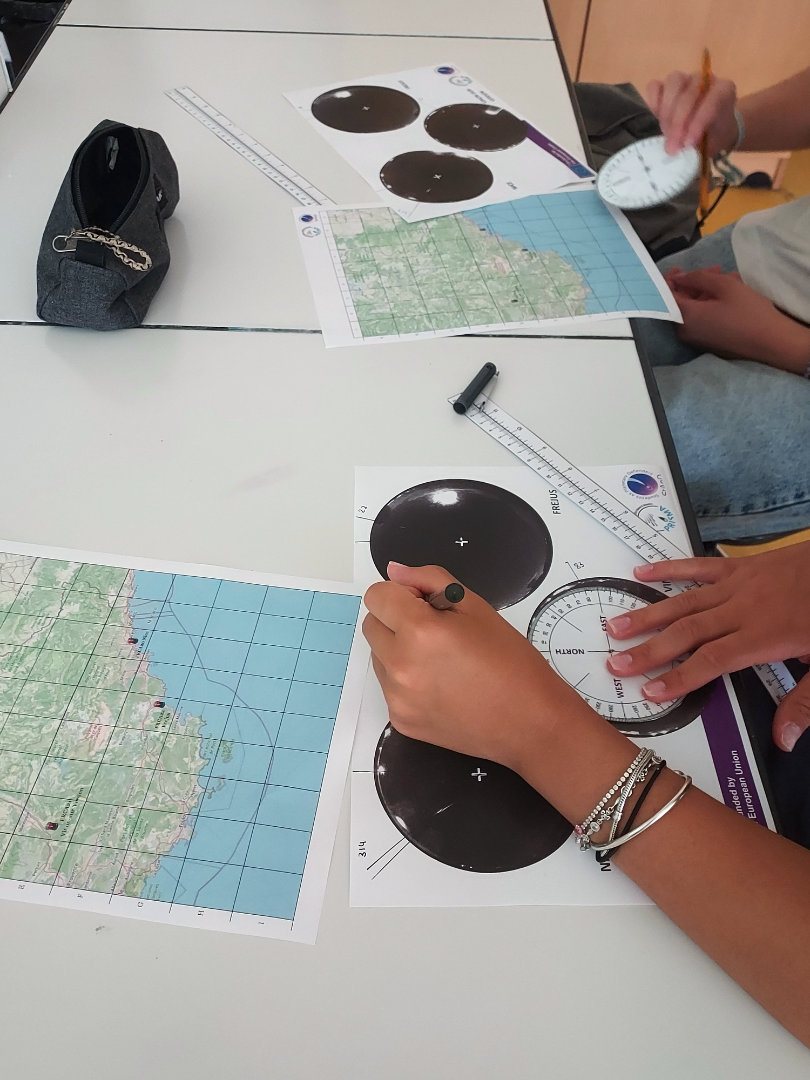
If you’d like to do the triangulation activity in your class to engage your students in a real scientific research process, check out the PASCAL manual on the StAnD website here: Meteor Camera Kit | Project STAND You don’t need to have the StAnD meteor camera kit!